Showing posts with label Book Reviews. Show all posts

Friday, February 19, 2010

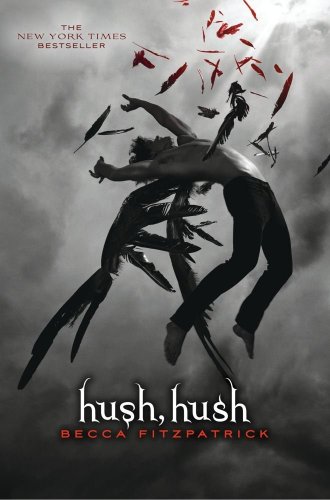
From the Bookshelf: Hush, Hush by Becca Fitzpatrick

I've gotten a serious windfall of books since Christmas time.    Check out all of my new lovelies:


Plus I just scored an ARC copy of Jeanette Walls' Half Broke Horses at my writers' group meeting tonight for answering a book trivia question.  Sweet!  I am having a smidge of anxiety though because -- seriously, when am I going to have time to read all of these?!  

If this were last August, I'd rip through all these bad boys in two weeks, but with Archer and devoting more of my free time to writing I'm thinking it's going to take considerably longer than that.  That's OK though, I'll take my time and enjoy them all.


Here's what I'm in the middle of tearing through right now (thanks to my awesome NBC book exchange elf Crystal who sent this to me):


The prologue got me interested.  France, 1565.  A creepy dark angel appears in a graveyard and extracts an ominous promise from an unsuspecting man.  There is talk of Nephilim, a legendary race of half mortal, half fallen angels.

Sounds good, right?

The first few chapters, however, felt a little too familiar.  Fast forward to present day Maine and meet our heroine, Nora Grey (No relation to Meredith, by the way).  A mysterious, smoldering new guy stares at Nora and makes her feel uncomfortable in Biology.  Nora enjoys driving her beat up old car.  Nora lives with her single parent.  It's rainy and foggy all the time. 

Twilight with angels anyone?  
 The similarities were eye-roll worthy, but apparently not enough to make me stop reading.  It just seems like a shame that an otherwise well written and creative book had to fall back on this formula. 

I'm about halfway through now and I'm officially sucked in.  The author has done a really good job of slowly ratcheting up the tension and it's getting hard to put down.  The dialog is good and I like the characters, especially Nora's sidekick and instigator Vee and her fruit color wheel diet.  I'm intrigued by what's going on with Patch, though I'm not an especially big fan of the name (says the girl who named her main character Malady).  Is he the dangerous stalker in the ski mask or is he Nora's protector?  And what about Elliott?  Gah!

I'll give you my final verdict on this one when I finish.  For now, I've got to get to shut eye so I can get some more reading and writing in tomorrow. 

Sunday, February 22, 2009

Bitter is the New Black by Jen Lancaster

Bitter is the New Black : Confessions of a Condescending, Egomaniacal, Self-Centered Smartass, Or, Why You Should Never Carry A Prada Bag to the Unemployment Office Bitter is the New Black : Confessions of a Condescending, Egomaniacal, Self-Centered Smartass, Or, Why You Should Never Carry A Prada Bag to the Unemployment Office by Jen Lancaster


My review


rating: 4 of 5 stars
I have read Jen Lancaster's blog off and on for a while now and I like her snarky no holds barred sense of humor.


I was also a victim of post 9/11 layoffs so I could empathize with some of the things she went through. I also think this is a book a lot of people in our country's current economic situation could appreciate as well. I have to say though, I was impressed by Jen's industriousness. I did OK on unemployment until after graduation the next spring, but after that I'm pretty sure I was depressed and sleeping in while she was up at 7am making calls and applying to every job posted on Monster.


This book really could have been just one big funny rant, but I was pleasantly surprised at the depth of it. The earlier chapters cracked me up, but for me it was the balance of humor and the humility, the lessons she learned over the course of her unemployment that brought resonance to the book. Not that I didn't enjoy her 'fat girl at the Chicago Marathon Health Fair'episode and her commentary about the 'Russian Army' building the house next door. It was just that I also liked seeing how she and her husband Fletch supported and took care of each other in the hard times and the way she swallowed her pride and took a greyhound bus to see her mom when she was in the hospital.


Overall, I really enjoyed this book and look forward to reading her other work.


View all my reviews.

Sunday, February 8, 2009

The Geography of Bliss: One Grumps Search for the Happiest Places in the World by Eric Weiner


This is the first non-fiction book I have read in a long time and I think this is one I will go back to again and again. The premise of this book sold me immediately- Eric Weiner, a long time NPR foreign correspondent realized that he has spent the bulk of his career traveling to rather depressing, unhappy places and decided, for a change, to seek out the happiest places in the world. His journey first takes him to The Netherlands to meet with the world’s foremost happiness researcher and then on to Switzerland, Iceland, Qatar, Bhutan (where the government actually measures GNH – Gross National Happiness), Thailand, Great Brittan, Moldova, India and then back home again.

I bought this book over a year ago in hardcover (gasp!) because I just had to have it right this minute, but alas I got onto a big fiction kick and it sat on my shelf patiently waiting until now to find its way into my hands. However, I think my timing was serendipitous because it seemed that every time I picked it up, something I’d just been thinking about popped up in the pages. After my husband and I were watching Lost and discussing who the real Jeremy Bentham was (Jeremy Bentham was the name John Locke used after leaving the island) and who shows up in the book that very same night when I sat down to read? Yep, question answered. Bentham, incidentally, was famous for his utilitarian principle “the greatest happiness for the greatest number.”

One thing I loved about this book was that it was full of passages and observations that really gave me food for thought. My copy is full of dog-eared pages and lines I’ve gone back to and jotted down. My favorite section was the bit about Iceland entitled Iceland: Happiness is Failure where Eric explores the link between the act of creating and happiness. Apparently in Iceland there is not such a negative stigma attached to failure which encourages a culture rife with creativity. One Icelander quipped that they would probably erect a statue to the one person who in Iceland who had not written a novel or poem or song. Here’s a passage from that chapter that especially resonated with me:

“There’s no one on the island telling them they’re not good enough, so they just go ahead and sing and paint and write. One result of this freewheeling attitude is that the Icelandic artists produce a lot of crap. They’re the first to admit it. But crap plays an important role in the art world. In fact, it plays exactly the same role as it does in the farming world. It’s fertilizer. The crap allows the good stuff to grow.”

Imagine how much more we might achieve in America if we, as a culture, weren’t so afraid of the ramifications of failure. I could sure use some time in Iceland creative boot camp.

My one disappointment with this otherwise thought provoking and very well written book was that the section on America seemed a bit rushed. It offered stories only about Miami and Asheville, North Carolina which hardly seemed representative of our entire country. But then, I wondered if any city or state might have been able to capture the essence of America. Probably not.

Wednesday, July 30, 2008

Book Review: The Septembers of Shiraz

Personally, I have always preferred getting my history lessons in story form.

I don’t know about you, but when I would sit in history class and the teachers would pontificate about timelines and wars and facts and figures, the Middle Ages, 1776, Napoleon, serfs, Galileo, 1893, Presidential assassins,1602, it would all blur together for me and sound like it was coming from the teacher in the Peanuts’ cartoons. Even though I was interested in learning about history, I could only get the vaguest ideas of the events to stick with me, dangling precariously from my cognitive map like a used post it note.

But put The Diary of Anne Frank or My Brother Sam is Dead (about the Revolutionary War) in my hands and bam - mental Super glue. All of the sudden, instead of seeing a blurry blip on the time line and a passage that made my eyes glaze over, I could see history through the eyes of a young girl, who like me, kept a diary, missed her friends and both loved and got annoyed with her family members. I could see through her eyes that the Holocaust meant that innocent Jewish families like hers had to go into hiding and hold their breath, hearts racing every time they heard a knock at the door wondering if this was the time they'd be caught and taken to the gas chambers of the concentration camps.

In The Septembers of Shiraz by Dalia Sofer, Isaac Amin and his memorable cast of family members, though fictional, were able to have the same sticking effect on me. The book transported me to 1980s Iran after the fall of the Shah when wealth was punished and none of rules of the old regime applied. In this tumultuous time, rare-gem dealer Isaac Amin is arrested and jailed by the Revolutionary Guard, falsely accused of being a Zionist spy. After his disappearance, his wife Farnaz searches anxiously for him while he endures months filled with isolation and torture and the rest of the family must deal with the lives they have always known being pulled apart piece by piece.

The book was artfully written. Dalia Sofer's narration has a quiet power that kept the pages turning and she does a great job of capturing the subtle contradictions and gray areas inside of us all. The narration comes from all four members of the Amin family: Issac, Farnaz, their nine year old daughter Shirin and their son Pariviz who has been sent to New York for college to avoid his being drafted into the Revolutionary Guard. I liked the changes in narration - Isaac who escapes the tedium and terror of prison by letting his mind drift to his younger days in Shiraz when he was a poet and idealist; Farnaz, who has numbed herself to the world and tries to carry on and hold the family together in Isaac's absence; Parviz, lost, alone and indifferent in New York with a futile hope of a relationship with his extremely religious landlord's daughter, and Shirin, trying to make sense of her father's disappearance, losing friends on the playground and boldly taking a risk that might save someone's life, but could also land her father in even more trouble. I felt particularly drawn to the parts from Shirin’s point of view and found myself wondering how much of the story that we saw through Shirin’s eyes came directly from the life experience of the author who fled Iran with her family when she was only ten.

One interesting thing that stood out to me is that the book is written in the seldom-used present tense. I love the immediacy this adds to the story, connecting someone like me, who has grown up in the US and been fortunate enough not to experience the horrors of watching my beloved homeland and family fractured and cleaved apart by the tyrants of an unstable government, to the events that took place in Iran after the fall of the Shah.

I also think the Sofer’s use of the present tense reflects the fact that the Amin family’s lives have been severed from the tranquil days of their lives before the revolution. With their pasts like a distant dream and their futures uncertain, they have no choice but to live day to day in the present moment.

I really enjoyed this book and while its not action packed, the force of the story propelled me forward and really kept the pages turning. It also definitely brought this period of Iranian history to life for me. I'm looking forward to reading more from Dalia Sofer in the future. Thanks to Gayle at Everyday I Write the Book Blog and Harper Collins for putting this book in my hands and hosting the great online book club discussion earlier this week. If you are interested in more from the author, check back on Gayle's site for an upcoming author interview.

***
Fun fact: Sofer means writer in Hebrew. I wonder if that is a family name that she grew into or if she took it on as her pen name because of its meaning.

Tuesday, July 22, 2008

Book Review: Extremely Loud and Incredibly Close by Jonathan Safran Foer

It has been an extremely long time since I have felt myself so drawn into the world created by a fiction writer and felt so emotionally involved with the unlikeliest of characters, nine-year-old Oskar Schell, a boy whose Dad was killed on 9/11 and his Grandparents, German immigrants whose lives were forever changed after the bombing in Dresden.

I have read so many novels in the earlier part of this year that I wanted so badly to be touching and thought provoking but they all fell short, except for this one.

This is a short summary from the book jacket: "Oskar Schell is an inventor, Francophile, tambourine player, Shakespearean actor, jeweler, pacifist. He is nine years old. And he is on an urgent, secret search through the five boroughs of New York to find the lock that fits a mysterious key belonging to his father, who died in the attacks on the World Trade Center."

Besides Oskar and his grandparents, I also loved the characters Oskar met along the way, like one hundred and three year-old Mr. Black who has a giant card catalog with a card for every person he ever met, each one labeled with one word that describes their essence.

I think Jonathan Safran Foer is one of the most talented young writers I have ever read. His detail and lifelike mixture of humor and sadness made the characters leap off of the page and right into my heart. I rarely listened to audio books before this one, but I picked it up on a whim and really enjoyed the performances.

Wednesday, June 25, 2008

Book Review: Stern Men by Elizabeth Gilbert

Stern Men Stern Men by Elizabeth Gilbert


My review


Here is fair warning: If you are looking for a book to fill the hole left by Eat, Pray, Love, reading Stern Men is like trying to shove a square lobster trap into that round hole. It doesn't quite fit the bill.

I really wanted to like this book. After reading Eat, Pray, Love last summer I was eager to read some of Elizabeth Gilbert's earlier works so my first pick was Gilbert's first novel, Stern Men set on two fictional islands off the coast of Maine. I thought it would be a pretty sure bet that I would love almost anything the Elizabeth Gilbert set down on paper, a bet I was disappointed to lose with myself with my mixed feelings on her debut novel.


What this book does well:

You can almost smell the salt air and you can definitely feel the boredom and the generations of animosity between the people of Fort Niles and Courne Haven Islands. Gilbert knows how to paint a gritty and lively picture of the backdrop for her heroine Ruth and the cast of characters around her.


Where it falters:

Descriptions of the history of the islands and the families living there seem to go on for days. They overwhelm the brief pockets of action in the story. It plot ekes forward at a painfully slow pace.


When I listened to Elizabeth Gilbert speak last year at the Book Group Expo in San Jose she cited Charles Dickens as one of her favorite authors and a big influence on her work. His influence was apparent in her stylistic choices for Stern Men. If you like sweeping prose descriptions that go on for fistfulls of pages filling you in on on every detail of backstory, this book may win you over. However, if you are looking forward to something actually happening, you might want to settle in and get comfortable because you might have to wait for a while.

The book does seem to pick up and redeem itself in the last 40 - 50 pages or so, Elizabeth Gilbert's confident and original voice that I'd been waiting for seemed to resurface and shine through to bring the story home.

View all my reviews.
 
Designed by Lena